Actionable insights on brewery production efficiency, inventory best practices, sales growth strategies, quality assurance, and distribution optimization tailored for modern craft breweries.
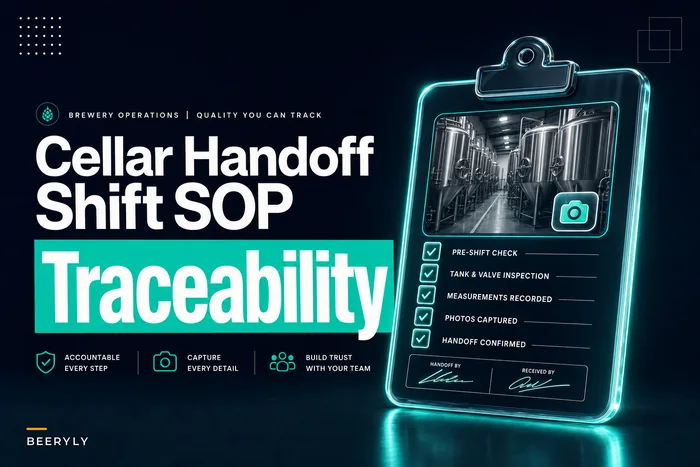
The FDA’s finalized Food Traceability Rule (05/27/2026) requires lot-level records and rapid data sharing for foods and beverages on the Food Traceability List. This post outlines a step-by-step operations plan for small and mid-size breweries: deciding whether the rule applies, mapping Critical Tracking Events, assigning traceability lot codes, updating labeling and inventory rules (FEFO/lot rotation), building 24-hour data retrieval workflows, and coordinating supplier/distributor data exchanges—plus quick wins to reduce implementation cost and production disruption.
Juan CabreraFounder of SoftWorks Global & Business Systems Researcher
Stepwise keg-tracking implementation for small breweries: deposit and policy templates, simple scanning workflows, routing rules and sample account billing policies to reduce lost kegs and invoice disputes.
Juan CabreraFounder of SoftWorks Global & Business Systems Researcher
Sampling cadence and templates keyed to production volume and risk: sample-log templates, escalation flowcharts for positives, and operator-focused procedures to catch issues before distribution.
Juan CabreraFounder of SoftWorks Global & Business Systems Researcher
Compact, operator-focused KPI set with exact formulas, threshold triggers, dashboard examples and playbooks: what operators should do when each KPI spikes or trends bad.
Juan CabreraFounder of SoftWorks Global & Business Systems Researcher
Shelf-life-aware inventory strategy tailored to hops, yeast and packaging: FEFO reorder rules, lot-rotation policies, safety-stock formulas by SKU risk tier and supplier-risk treatments to reduce spoilage and cash tied up in inventory.
Juan CabreraFounder of SoftWorks Global & Business Systems Researcher